
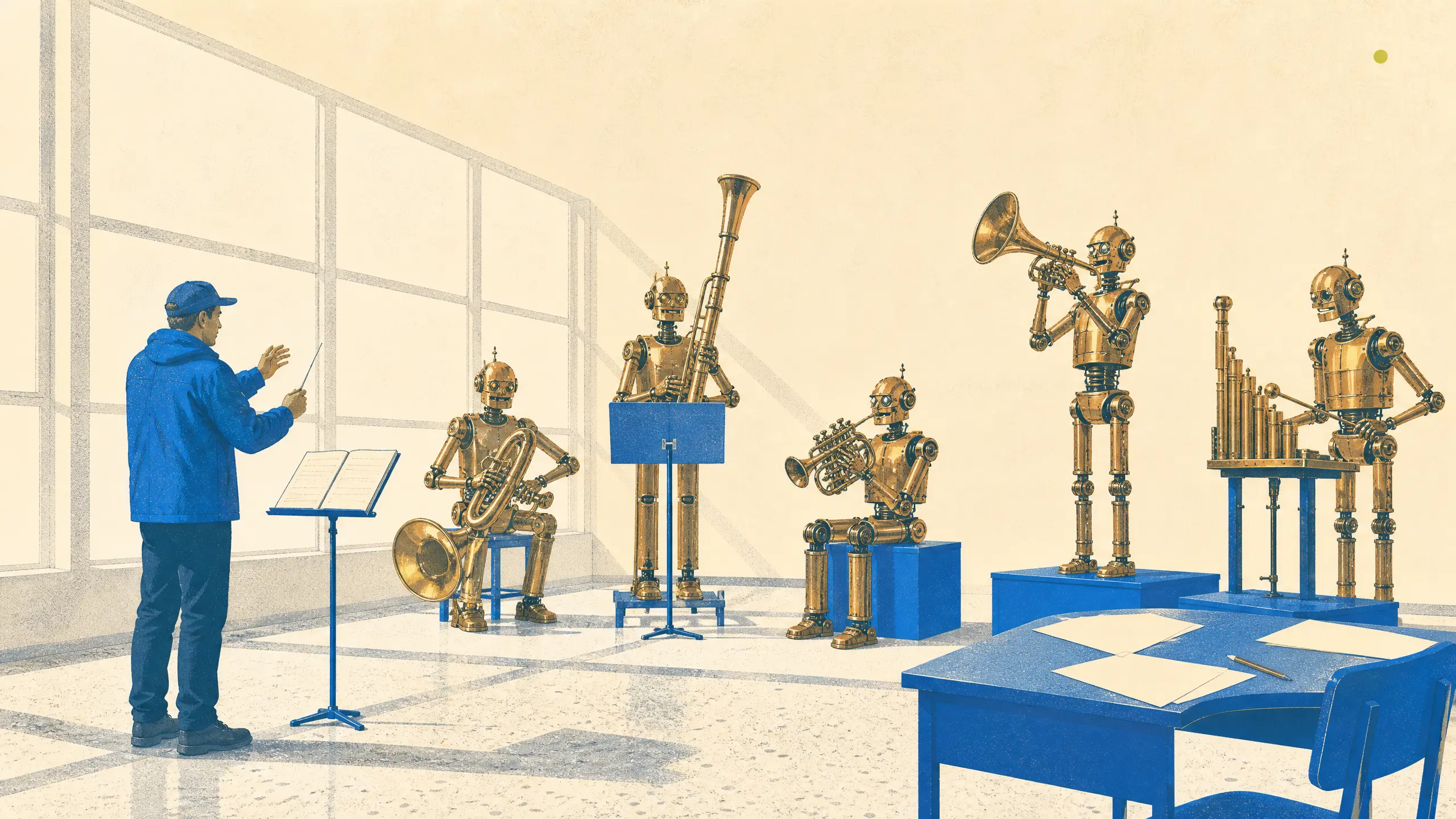
Six instruments, six opinions
Copper Choir begins with a rehearsal that falls apart in forty seconds. The percussion unit anticipates every fourth beat, the reed machine refuses notes above a certain pressure, and the enormous bass automaton pauses whenever a tram passes the hall. Your job as substitute conductor is not to repair these behaviours. The budget has already been spent. You must write arrangements that treat them as features.
The interface resembles a mechanical score. Instead of placing individual notes, you set windows of attention, pressure limits and cues between performers. A phrase succeeds when each machine receives enough information to behave predictably without becoming rigid. It is a rhythm game built around negotiation rather than reflex.
The pleasure of a useful compromise
Early puzzles teach one machine at a time. Later movements ask the ensemble to absorb interruptions from the building: a faulty ventilation cycle, an audience entering late, a soloist whose tempo changes with room temperature. There is rarely one optimal solution. A clean performance earns technical marks, while a more flexible arrangement can score higher for character.
That dual evaluation is more than a grade chase. Recordings of your rehearsals are played back from fixed microphones around the hall. A solution that looks untidy on the planning table can sound warm and alive from the balcony. The game repeatedly asks you to listen after you have solved.
Comedy without contempt
The machines are funny because their limitations are specific. The flute unit carries a maintenance manual full of passive-aggressive annotations. The bass machine blocks a fire exit and is embarrassed about it. None of them is treated as a defective person waiting for a human to provide a soul. They are equipment with histories, habits and relationships to the people who maintain them.
Short conversations with technicians keep the story grounded. A valve replacement affects tone. A funding deadline changes rehearsal priorities. The final concert matters because a public room has slowly become functional, not because the future of music depends on it.
An encore too many
The central campaign ends at exactly the right moment. The optional encore book does not. Several advanced pieces increase difficulty by adding more simultaneous panels rather than deepening the logic between performers. On the small Switch screen, the final score pages can become visually dense enough to undermine an otherwise excellent interface.
Even so, Copper Choir is generous in the ways that count. It offers a precise musical system, allows multiple expressive answers and turns correction into a process of understanding. Most rhythm games ask whether you can match a performance. This one asks what kind of performance the available people and machines can honestly make together.
You are never correcting a wrong note in isolation; you are deciding which kind of mistake the whole room can carry.