The case arrives late
The northbound overnight service reaches Larch Junction seventy-three minutes behind schedule and one passenger short. You are not a detective. You are the regional timetable editor asked to reconstruct how a chain of weather delays moved through the network. The missing passenger becomes visible only because their reserved seat, meal order and onward connection no longer agree.
Northbound Signal builds its mystery from operational documents. Working timetables show intended movements. Station logs record what actually happened. Carriage plans establish who could move between compartments. No clue shines. Every fact becomes useful only when placed beside another.
A table that argues back
The central workspace is a wide paper timeline. Tickets, calls, delays and sightings can be pinned to it, but the game will not confirm a theory simply because two cards touch. You write a claim in plain terms — the passenger left the train at Milepost 42, for example — and the interface asks what evidence makes that movement possible. If the service never stopped there, your theory remains visibly unsupported.
This structure discourages the familiar mystery-game habit of clicking every object until a revelation triggers. You can carry several competing explanations at once. Contradictions are not failure states; they are useful labels.
Weather as system, not mood
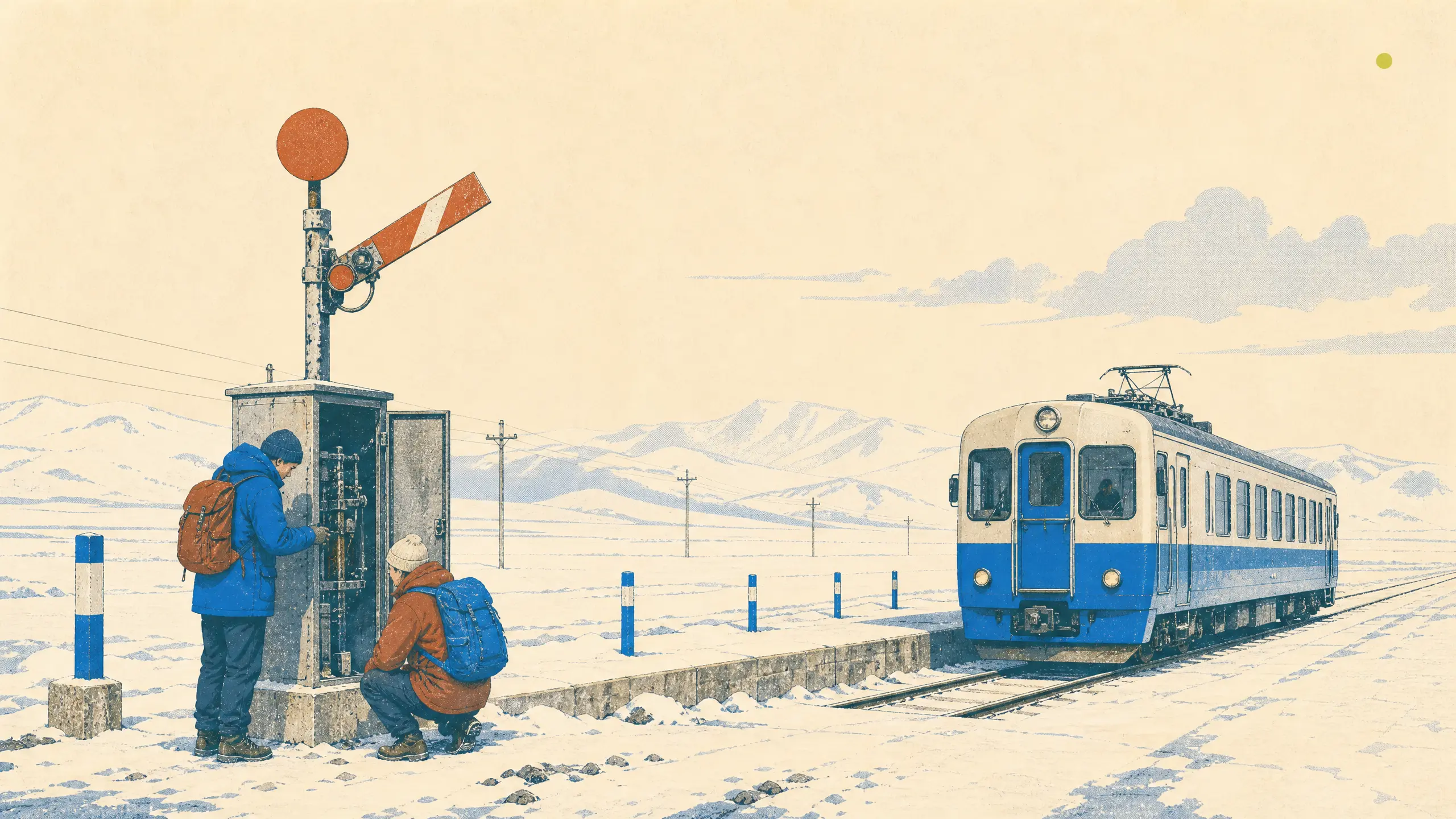
Snow is more than atmosphere. It reduces line speed, closes a footbridge and changes which station camera can see a platform. Wind determines whether announcements were audible. Frozen points force a train to arrive on the opposite track, altering every passenger path through the station.
The game is especially good at showing how ordinary systems create accidental secrecy. Nobody planned an impossible alibi. A dispatcher, two cleaners and a late connection produced one between them. That institutional texture makes the railway feel populated even when the platforms are nearly empty.
The final announcement
For most of its length, Northbound Signal trusts inference. Its last hour becomes nervous. A sequence of voiced recollections confirms several conclusions the player has probably already reached, while a final notebook entry explains a motive that was more affecting when left partial. The case remains satisfying, but the game briefly stops believing in its own evidence.
That excess does not erase what came before. The timeline is one of the clearest investigative interfaces in recent memory, and the winter network is more than an attractive setting. It is the mystery's grammar. By the time the final service departs, a timetable has become a record of choices, pressures and small human evasions.
A delay is never empty time here. It is a pocket in which somebody could have changed trains, moved a bag or invented an alibi.